How to Import Mobile Concrete Pump Truck for Sale in South Africa to Nearby Country
- aimixgroup china
- Jan 27
- 9 min read

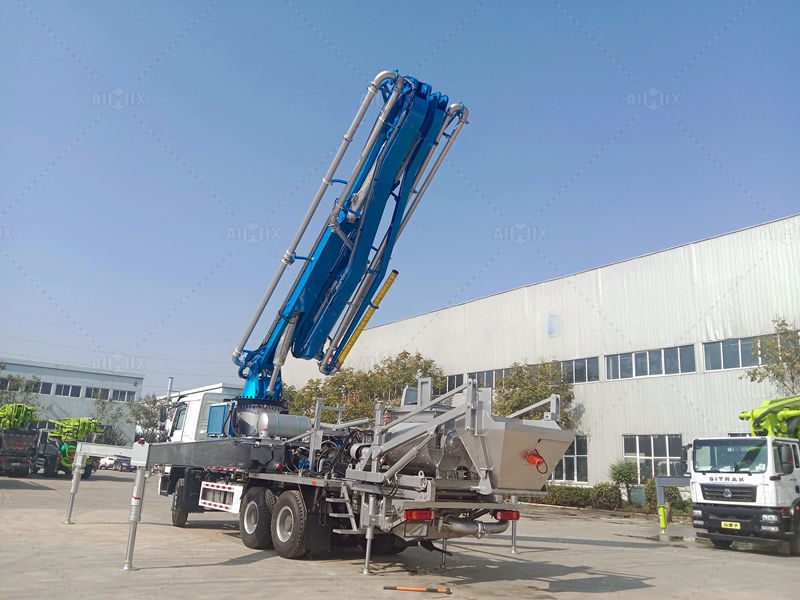
South Africa, as a core economic and trade hub in Southern Africa, boasts a mature construction machinery market with abundant supplies of concrete pump truck for sale in South Africa, including various types of concrete mobile pump that are widely used in infrastructure projects. Importing concrete mobile pump truck for sale in South Africa to nearby countries (such as Namibia, Botswana, Lesotho, and Zimbabwe) has become a common choice for contractors and construction enterprises in the region, thanks to geographical proximity, convenient transportation, and compatible technical standards. However, the import process involves multiple links such as supplier selection, document preparation, customs clearance, transportation organization, and compliance verification. Mastering the standardized operation process and key points is crucial to ensuring smooth import, reducing costs, and avoiding trade risks. This article will detail the complete process and core considerations for importing such equipment.
Pre-Import Preparation: Lay a Solid Foundation for Smooth Trade
Pre-import preparation is the premise to ensure the smooth progress of importing concrete mobile pump truck for sale in South Africa to nearby countries, which mainly includes clarifying import requirements, selecting qualified suppliers, and confirming equipment compliance. Firstly, it is necessary to comprehensively understand the import policies and technical standards of the destination country (nearby country of South Africa). Different countries have specific regulations on the import of construction machinery such as concrete mobile pump, including product certification, emission standards, and safety specifications. For example, Lesotho, a landlocked country adjacent to South Africa, requires imported construction machinery to meet the Southern African Development Community (SADC) technical specifications and obtain relevant certification documents, while Namibia requires imported concrete mobile pump to pass local safety performance testing and emission inspections that are consistent with South African standards in most cases.
Secondly, selecting a reliable supplier of concrete pump truck for sale in South Africa is a key link. It is recommended to give priority to formal suppliers with complete qualifications, rich experience in cross-border trade, and stable after-sales services, such as local authorized dealers of international brands or well-known local construction machinery suppliers in South Africa. When selecting suppliers, it is necessary to verify their business licenses, import and export qualifications, and product quality certificates, and request detailed information about the concrete mobile pump, including technical parameters, production date, maintenance records, and whether it meets the import standards of the destination country. In addition, it is necessary to sign a formal trade contract with the supplier, clearly stipulating the product model, quantity, price, payment terms, delivery time, quality assurance, and liability for breach of contract. Especially for the concrete mobile pump with special configurations, it is necessary to clarify the technical requirements and acceptance standards in the contract to avoid disputes.
Finally, confirm the compliance of the concrete mobile pump to be imported. The concrete pump truck for sale in South Africa must meet not only the export requirements of South Africa but also the import standards of the destination country. On the one hand, it is necessary to check whether the equipment meets the emission standards of the destination country (such as Euro V or local emission specifications) and whether it has passed the relevant product certification, such as the South African Bureau of Standards (SABS) certification, which is widely recognized in Southern African countries. On the other hand, it is necessary to confirm whether the equipment involves restricted or prohibited items and whether an import license is required. For example, some nearby countries of South Africa require an import license for large construction machinery with a weight exceeding 50 tons, and the application process needs to be completed in advance before importing.
Document Preparation: Ensure Compliance with Customs Clearance Requirements
Complete and standardized document preparation is the core to ensuring smooth customs clearance in both South Africa (export) and the destination country (import). The lack or irregularity of documents may lead to customs detention, fines, and delays in the import process. Therefore, it is necessary to sort out and prepare all required documents in advance according to the regulations of both countries. The core documents for importing concrete mobile pump truck for sale in South Africa to nearby countries mainly include the following categories.
First, the basic trade documents. These include the commercial invoice, packing list, bill of lading (or waybill), and trade contract. The commercial invoice must clearly list the name, model, quantity, unit price, total price, origin, HS code, and FOB value of the concrete mobile pump, and be signed and sealed by the supplier. The packing list should detail the weight, volume, packaging method, and number of pieces of each equipment to facilitate customs inspection and loading and unloading. The bill of lading (for sea transportation) or waybill (for land transportation) is the proof of ownership of the goods, which must be consistent with the information on the commercial invoice and packing list. For land transportation between South Africa and nearby landlocked countries (such as Botswana and Lesotho), it is necessary to use the international waybill recognized by the Southern African Customs Union (SACU).
Second, the certification and qualification documents. These include the certificate of origin, product quality certificate, SABS certification, and import license (if required). The certificate of origin is crucial for enjoying preferential tariffs. Since South Africa is a member of the Southern African Customs Union (SACU), if the concrete mobile pump meets the origin rules (local value-added rate ≥35%), it can apply for the FORM SACU certificate of origin, which allows the goods to enjoy preferential tariff treatment when entering other SACU member countries (such as Namibia, Botswana, and Swaziland). The product quality certificate should be issued by a professional testing institution, proving that the concrete mobile pump meets the relevant technical standards and safety requirements. The SABS certification is a mandatory certification for electrical and mechanical products in South Africa and is widely recognized in nearby countries, which can greatly simplify the import inspection process.
Third, the special documents for construction machinery. These include the equipment maintenance record, technical manual (in English or the official language of the destination country), and emission test report. The equipment maintenance record can prove the usage status and maintenance history of the concrete mobile pump, helping the customs and the buyer to evaluate the quality of the equipment. The technical manual should detail the structure, working principle, operation method, and maintenance requirements of the concrete mobile pump to facilitate the subsequent use and maintenance of the buyer. The emission test report is used to prove that the equipment meets the emission standards of the destination country, which is an essential document for import inspection in most countries.
Customs Clearance and Transportation: Ensure Smooth Cross-Border Circulation
Customs clearance and transportation are the key links in the process of importing concrete mobile pump truck for sale in South Africa to nearby countries, which involve the coordination of multiple parties such as customs, logistics companies, and suppliers. It is necessary to formulate a reasonable plan according to the geographical location of the destination country and the characteristics of the equipment to ensure the smooth and safe arrival of the goods.
In terms of customs clearance, it is necessary to complete the export customs clearance in South Africa first and then the import customs clearance in the destination country. For export customs clearance in South Africa, the supplier or the entrusted local customs broker needs to submit the relevant documents to the South African Revenue Service (SARS) through the electronic customs clearance system (SARS eFiling), including the commercial invoice, packing list, bill of lading, certificate of origin, and export declaration form. The customs will calculate the export tax (if applicable) according to the value of the goods and conduct random inspections. After passing the inspection and paying the relevant fees, the goods can be released for export. For import customs clearance in the destination country, the buyer or the local customs broker needs to submit the import declaration documents to the local customs in a timely manner after the goods arrive, including the commercial invoice, packing list, bill of lading, certificate of origin, import license, and product certification documents. The customs will verify the documents, inspect the goods, and calculate the import tariff and value-added tax (VAT). The average import tariff for construction machinery in nearby countries of South Africa is 8%-15%, and the VAT rate is 10%-15%, which needs to be paid in full before the goods are released.
In terms of transportation, the choice of transportation mode mainly depends on the geographical location of the destination country and the size of the concrete mobile pump. For coastal countries near South Africa (such as Namibia), sea transportation is a cost-effective choice. The goods can be transported from South African ports (such as Durban and Cape Town) to the ports of the destination country by sea, and then transported to the final destination by land. For landlocked countries (such as Lesotho and Botswana), land transportation is the main mode, usually using heavy-duty trucks or special transport vehicles. However, the land transportation in Southern Africa faces challenges such as complex terrain, poor road conditions, and multiple border checkpoints. For example, transporting concrete mobile pump from South Africa to Lesotho needs to pass through mountainous areas with many steep slopes and hairpin bends, which requires selecting experienced drivers and special transport vehicles, and conducting route surveys and road reinforcement in advance if necessary. In addition, it is necessary to entrust a professional cross-border logistics company with rich experience in Southern Africa to undertake the transportation task, which can effectively handle the issues of border crossing, road permits, and emergency disposal.
Post-Import Inspection and After-Sales Guarantee: Ensure Normal Use of Equipment
After the concrete mobile pump truck for sale in South Africa arrives at the destination country and completes customs clearance and transportation, it is necessary to carry out post-import inspection and confirm the after-sales guarantee to ensure that the equipment can be used normally. Post-import inspection mainly includes appearance inspection, performance test, and safety inspection. The appearance inspection is to check whether the equipment is damaged during transportation, whether the parts are complete, and whether the packaging is intact. The performance test is to start the equipment and test its mixing, pumping, and other functions to ensure that the technical parameters meet the requirements. The safety inspection is to check whether the safety devices (such as emergency stop devices and overload protection devices) of the equipment are effective and whether they meet the safety standards of the destination country.
If any quality problems or damage are found during the inspection, it is necessary to timely contact the supplier and put forward claims in accordance with the trade contract. At the same time, it is necessary to sort out the inspection records and relevant evidence (such as photos and test reports) to provide a basis for claims. In addition, it is necessary to complete the relevant procedures for the use of the equipment in the destination country, such as applying for a vehicle license plate, registration certificate, and operation permit. Different countries have different requirements for the registration and use of construction machinery, and it is necessary to go through the relevant procedures in accordance with local regulations to avoid illegal operation.
After-sales guarantee is an important part of the import process, which is directly related to the subsequent maintenance and repair of the concrete mobile pump. When signing the trade contract with the supplier, it is necessary to clearly stipulate the after-sales service terms, including the warranty period, maintenance scope, spare parts supply, and on-site service. It is recommended to choose suppliers that can provide after-sales service in the destination country or have cooperative after-sales service outlets, which can timely provide maintenance and repair services when the equipment fails. In addition, it is necessary to purchase spare parts for the concrete mobile pump in advance, especially vulnerable parts such as pump pipes and sealing rings, to avoid affecting the construction progress due to the lack of spare parts.
Key Risk Prevention and Control Measures
Importing concrete mobile pump truck for sale in South Africa to nearby countries involves multiple risks, such as policy risks, quality risks, and logistics risks. It is necessary to take targeted prevention and control measures to reduce the loss caused by risks. Firstly, to prevent policy risks, it is necessary to keep abreast of the changes in import and export policies, technical standards, and tariff rates of South Africa and the destination country, and adjust the import plan in a timely manner. It is recommended to consult the local customs, trade promotion agency, or professional legal advisor before importing to ensure that the import process is compliant.
Secondly, to prevent quality risks, it is necessary to conduct on-site inspection of the concrete mobile pump before shipment, or entrust a third-party testing institution to conduct quality inspection. The on-site inspection can directly check the quality and performance of the equipment, and find potential quality problems in advance. For used concrete mobile pump, it is necessary to pay more attention to the service life and maintenance history of the equipment to avoid purchasing equipment with serious wear or potential faults.
Finally, to prevent logistics risks, it is necessary to choose a reliable logistics company and formulate a reasonable transportation plan. It is necessary to purchase cargo transportation insurance to transfer the risk of equipment damage or loss during transportation. In addition, it is necessary to keep in close contact with the logistics company during the transportation process, track the transportation status of the goods in real time, and handle emergency situations (such as road blockages and vehicle breakdowns) in a timely manner.
In summary, importing concrete mobile pump truck for sale in South Africa to nearby countries requires comprehensive pre-import preparation, standardized document preparation, smooth customs clearance and transportation, and solid post-import inspection and after-sales guarantee. By mastering the key links and risk prevention and control measures of the import process, contractors and construction enterprises can effectively reduce costs, avoid risks, and ensure that the concrete mobile pump is imported smoothly and put into use normally, providing strong support for the infrastructure construction of nearby countries in Southern Africa.


Comments